Composition
Composition is the part of photography you can improve without buying a single thing, which is why it comes first for most beginners. These tutorials cover where to put a subject and a horizon: the rule of thirds and its gentler cousin the golden ratio, leading lines, negative space, framing with whatever is around you, and symmetry when you want a subject dead centre. None of it is a law. Each lesson explains when the guideline genuinely helps and when breaking it makes the stronger photograph, because the point is learning to see the frame as a set of decisions rather than a rectangle you point at things.
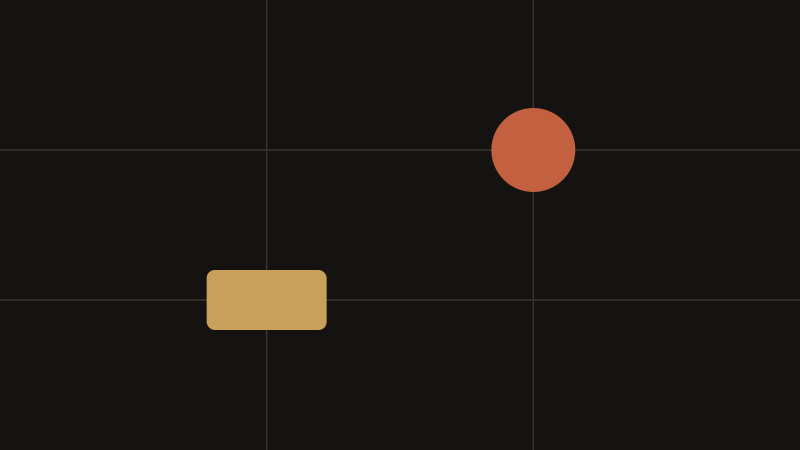
Rule of Thirds: The Grid That Makes Photos Instantly Better
The rule of thirds is the fastest way to turn a flat snapshot into a balanced, intentional photograph. Here is how to actually use it in the field.
Leading Lines: Pull the Viewer's Eye Into Your Photo
Leading lines are any lines in a scene that guide the eye toward your subject. Learn where to find them and how to use them without letting them run away.
Framing in Photography: Use What's Around You to Isolate a Subject
Framing means composing so that elements around your subject form a border around it. It adds depth and instantly directs attention.
Negative Space Photography: Why Less Subject Makes a Stronger Photo
Negative space is the empty area around your subject. Used well, it makes a small subject feel bold and gives the eye room to rest.
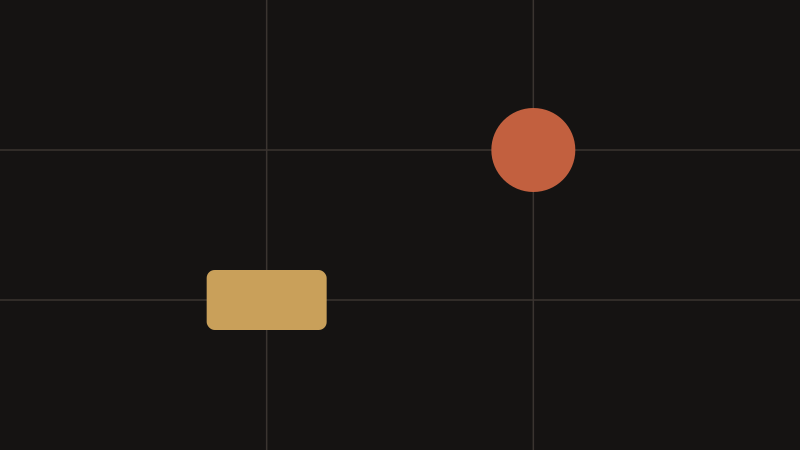
Symmetry and Balance in Photography: When to Center Your Subject
Symmetry is one of the most satisfying compositions in photography and one of the easiest to get slightly wrong. Here is how to nail it.
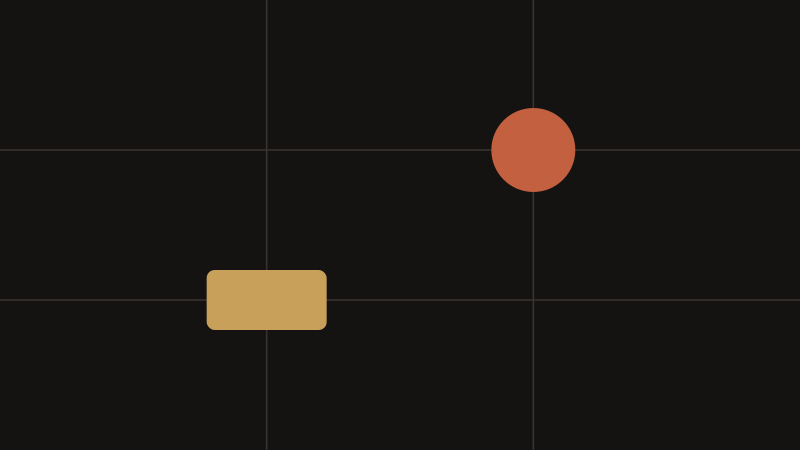
The Golden Ratio in Photography: A Gentler Alternative to the Rule of Thirds
The golden ratio places your subject at roughly 1.618 instead of one third. It is subtler than the rule of thirds and works beautifully for landscapes.