Home — Pixelz
Photography, taught one frame at a time.
Pixelz is written for one kind of reader: someone who owns a camera, and a phone absolutely counts, who keeps coming home with photographs that are almost right. The light was good, the moment was there, and the picture still does not match what you saw when you pressed the shutter. That gap is almost never talent. It is a short list of skills that nobody sat down and explained, and this site exists to close it one frame at a time.
Everything here is free to read and written for beginners, which means we start from the reason a technique works and then hand you the settings. Understanding why a wide aperture blurs the background lets you decide for yourself when blur helps a portrait and when it ruins a landscape; memorising f/1.8 does not. Principles survive a new camera. Recipes do not.
The tutorials are grouped into nine topics that roughly follow the order most people learn them. Exposure covers how much light reaches the sensor: aperture, shutter speed, ISO, and how to read a histogram instead of guessing. Composition is about where things sit inside the frame, from the rule of thirds and leading lines to negative space, framing and symmetry. Lighting is about the character of the light itself, from golden hour to hard midday sun to a single window at home. Then come the technical tools, camera settings and lenses: P, A, S and M modes, white balance, metering and autofocus modes, RAW versus JPEG, focal length, prime versus zoom, wide-angle, telephoto, macro and bokeh. Portrait, landscape and night photography put those skills to work on real subjects, and post-processing covers what happens after the shutter closes.
The worst way to use this site is to read it front to back. Pick the topic where your own photographs disappoint you most, read one tutorial, and go shoot that kind of subject within the week. One lesson applied on a real walk beats ten lessons skimmed on a sofa.
When you do go out, change one variable at a time. Shoot the same scene at f/2.8 and again at f/8, or at 1/60 and 1/500, then compare the two files on a computer screen rather than on the back of the camera. That comparison is the whole feedback loop of photography, and it is the fastest way to make a technique yours instead of borrowed.
Every tutorial follows the same shape: a plain-language explanation, diagrams for the concepts that are hard to picture, a short list of key points, and settings you can copy on your next shoot. Most are a five-minute read. Each one ends with answers to the questions beginners actually ask, like why indoor photos look orange, why autofocus keeps grabbing the background, and why the moon comes out as a white dot.
You will not find sponsored gear rankings, commission-driven best-lens lists, or a promise that a preset pack will fix your photographs. Equipment matters far less than the internet suggests, and most lessons here work with a kit lens, a cheap 50mm, or the phone in your pocket. Where gear genuinely changes the result, we say so plainly and explain what it changes.
The goal is small and specific: that your photographs start looking like the ones you meant to take. Read one lesson, take one walk, and look at the results honestly. That is the whole method.
Latest tutorials
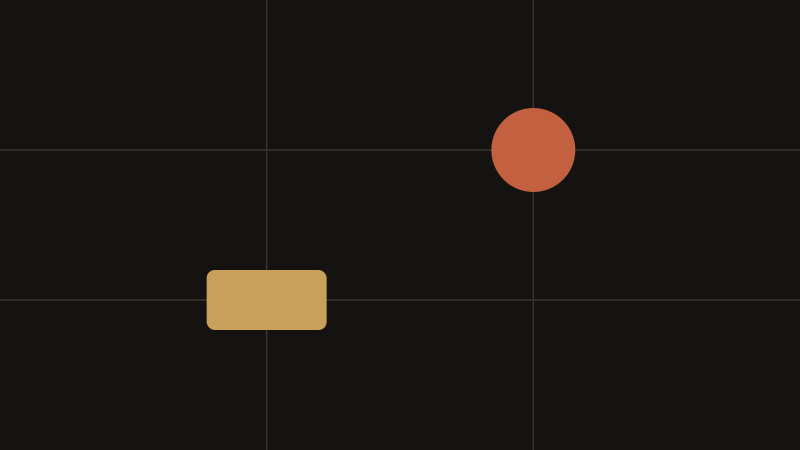
Rule of Thirds: The Grid That Makes Photos Instantly Better
The rule of thirds is the fastest way to turn a flat snapshot into a balanced, intentional photograph. Here is how to actually use it in the field.
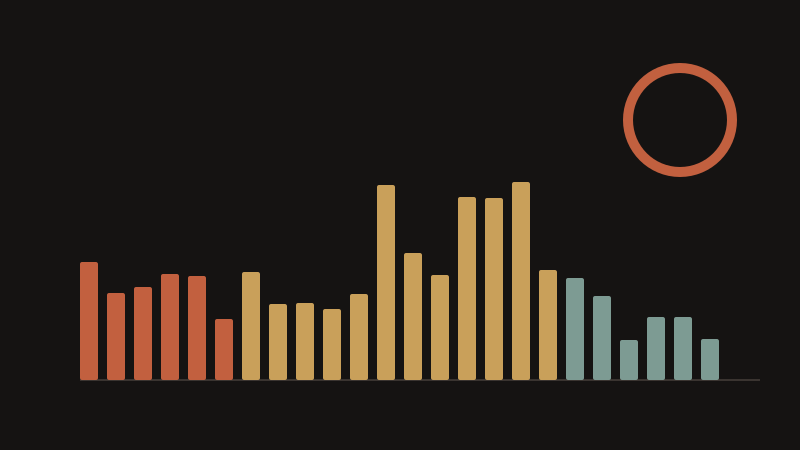
The Exposure Triangle: Aperture, Shutter Speed, and ISO
The exposure triangle is the single most important idea in photography. This guide explains how aperture, shutter speed and ISO trade off against each other in whole stops.
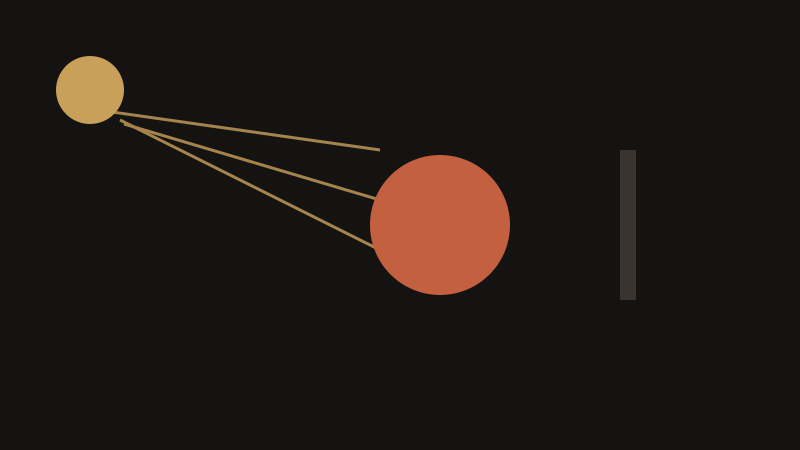
Golden Hour Photography: Timing, Exposure and Light
Golden hour gives you warm, low-angle light and soft shadows. This guide shows you when it happens, how to expose for it, and how to compose with it.
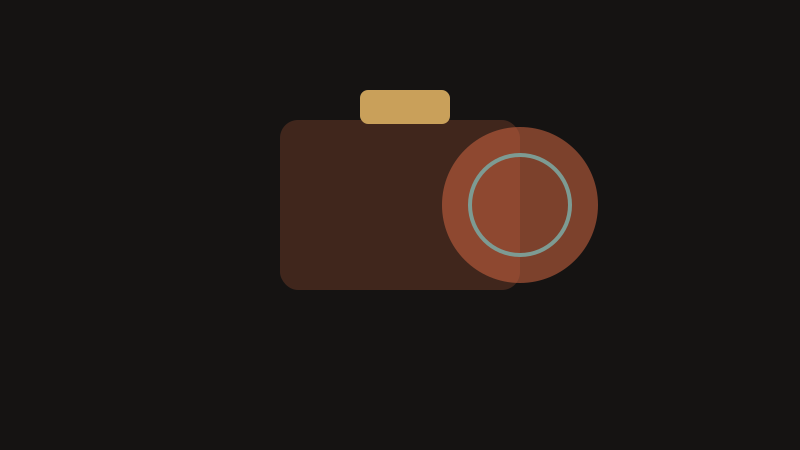
Understanding P, A, S and M Camera Modes
A plain-English guide to the four exposure modes, what each one actually controls, and exactly when to switch to which.
Prime vs Zoom Lenses: Which Should You Buy First?
Prime or zoom? This guide breaks down how each lens type changes your shooting, your budget and your images so you can choose the right one.

Portrait Lighting Basics: Rembrandt, Butterfly and Split Light
One light and a window are enough to make a great portrait. This guide teaches loop, Rembrandt, butterfly and split light, plus rim separation and the mistakes that flatten a face.