COMP · Composition
Negative Space Photography: Why Less Subject Makes a Stronger Photo
Negative space is the empty area around your subject. Used well, it makes a small subject feel bold and gives the eye room to rest.
Diagrams

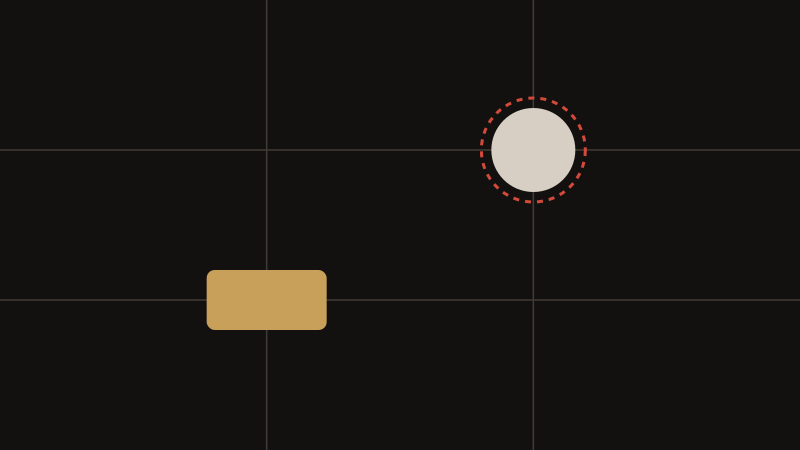

Negative space is the empty or quiet area around and between your subjects: clear sky, calm water, a blank wall, sand, fog, or shadow. It is not wasted space. It is the pause that makes the subject speak. A lone cyclist against a huge grey sky, a single red leaf on white snow, or a bird in a field of blue all draw power from how little there is to look at. The eye reads the empty area first as calm, then lands sharply on the one thing that is different.
To use negative space deliberately, simplify hard. Find a subject with a clear, recognizable shape such as a silhouette, a person walking, or a single flower, and then move until the background is clean. Get low or high to put the subject against sky, water, or a plain wall instead of clutter. Expose for the bright background if you want a silhouette, or use spot metering on the subject to keep detail. Leave far more empty space than feels comfortable at the time, because on screen it will look intentional rather than empty.
Place the subject small and at one of the intersections of the rule of thirds, and give the empty space a direction by putting the subject at the edge it is moving toward, so the space reads as where it is going. Keep the background texture even, since one stray cloud or a single distracting branch in an otherwise clean sky breaks the calm. Watch your edges as well, because a bright object clipping the corner of the frame pulls the eye away.
The usual mistake is not going far enough, so a nearly empty frame still has a messy corner or a second subject. Another is losing the subject entirely, since negative space should frame a clear idea rather than hide it. Check color too, because a muted, low-contrast background is usually calmer than a bright one. Fill the frame with the feeling you want, and let one small, sharp subject carry the whole image.
Key points
- Find a subject with a clean, simple shape, then move until the background is empty.
- Leave far more empty space than feels comfortable - it will read as intentional.
- Give the space a direction: place the subject on the side it moves toward.
- Keep the background even; one stray branch or cloud breaks the calm.