COMP · Composition
Framing in Photography: Use What's Around You to Isolate a Subject
Framing means composing so that elements around your subject form a border around it. It adds depth and instantly directs attention.
Diagrams
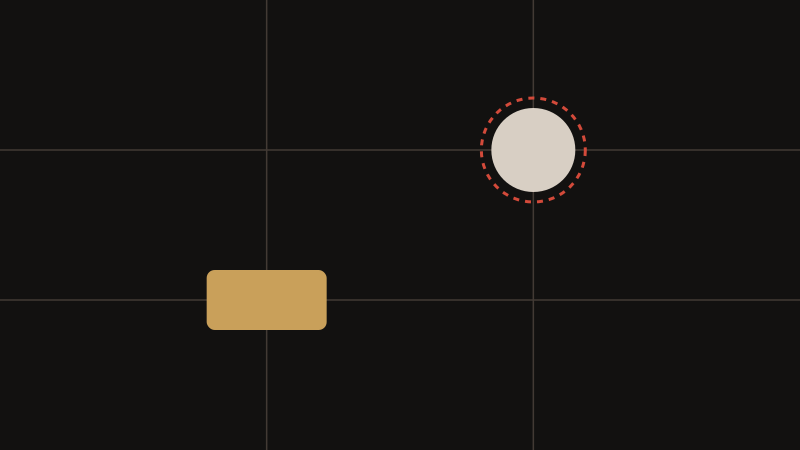
Framing is the trick of placing something in front of or around your subject so it becomes a border: an archway, a doorway, a window, tree branches, a gap between buildings, a crowd of people, or even a companion's shoulder. The frame does two jobs at once. It blocks out distracting background, and it pushes the viewer's eye straight to the middle. Frames can be sharp, blurry, bright, dark, or almost black; a silhouette works especially well because the eye naturally travels from dark edges to the lit subject.
To build a frame, look for an opening that your subject can sit inside, then move until the opening surrounds them without crowding. Shoot slightly wider than you think you need and crop later, because a frame that is too tight looks like a mistake. If the frame element is close to the lens, aperture controls how much it blurs: a wide aperture such as f/2.8 softens it into a haze, while f/8 keeps it readable. Meter for your subject, not the frame, since a dark archway will fool the camera into overexposing a bright subject, so check the histogram.
Common mistakes include framing so tightly that the border competes with the subject, using a frame that is brighter or more colorful than the subject itself, and leaving the subject dead center when a slight offset would feel more natural. Also watch for frames that cut awkwardly through a head or a shoulder. Walk around the frame and shoot several versions, because a half step left or a little lower often turns a cluttered opening into a clean one.
Framing works because it creates layers: foreground, subject, background. That layering gives a flat photograph a sense of depth that viewers feel without being able to name. It is also one of the few composition tools that works in messy places such as a busy street, a crowded market, or a forest, because the frame hides the mess while keeping a sense of place. Look for frames before you look for subjects, and half your compositions will already be built.
Key points
- Look for archways, windows, branches, or gaps that can surround your subject.
- Shoot a little wider than you need - a frame that is too tight looks like a mistake.
- Meter for the subject, not the dark frame, and check the histogram.
- Framing adds foreground and background layers, which creates depth.