LIT · Lighting
Hard Light Photography: Using Harsh Sun Deliberately
Hard light creates crisp shadows and bold contrast. Used on purpose, it produces graphic, dramatic images instead of unflattering ones.
Diagrams

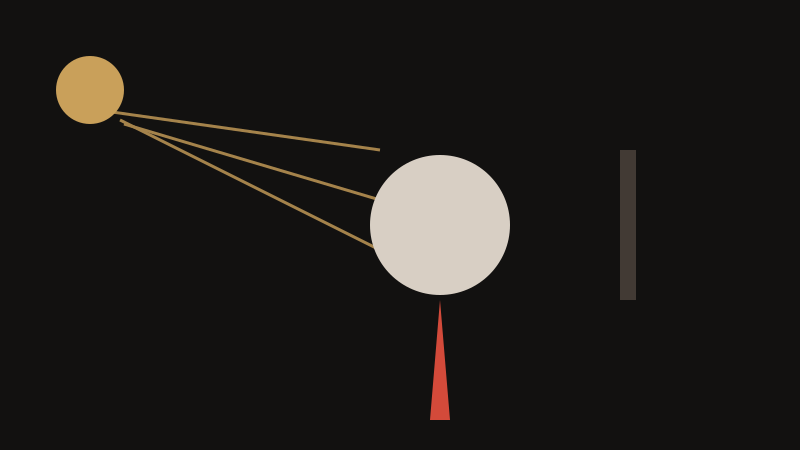

Hard light comes from a small source relative to the subject: a bare speedlight, direct midday sun under a clear sky, or any undiffused lamp. It draws a sharp, clearly defined shadow edge, keeps contrast high, and reveals texture and small detail in a way soft light never does. The problem with noon sun is not only its hardness but its direction. It comes from straight above, so it carves dark sockets under the brows and a shadow under the nose. Change the direction and the same light becomes usable.
Lean into hard light for architecture, where crisp shadows of railings and windows become part of the design; for street and documentary work, where contrast conveys energy; for texture such as sand, rock, rust and skin; and for graphic portraits with a split or butterfly look. Shadow patterns from blinds, leaves, a fence or a window frame are also a gift, and midday is the only time you get them at these angles.
To control it, soften the source with a scrim, a translucent panel or a diffusion disc held between sun and subject. Alternatively, embrace it but choose the direction: turn your subject so the light crosses at 45 to 90 degrees, and add a reflector or a small flash as fill on the shadow side. Negative fill, a black card or flag, deepens the shadows and adds depth. A doorway, a colonnade or the edge of a building's shadow gives you a soft key with a hard background, which is a classic trick.
Exposure is critical because highlights clip fast in direct sun. Meter for the brightest skin or surface that must hold detail, check the histogram and highlight warnings, and let unimportant shadows go dark. Shoot RAW so you can lift shadows without noise. Common mistakes include letting the subject squint into the sun, shooting flat midday portraits with no fill or shaping, and blowing out white clothing or concrete.
Key points
- Hard light comes from a small source: direct sun, a bare flash, or any undiffused lamp.
- Use it for architecture, texture, street scenes and graphic portraits where bold shadows are an asset.
- Shift direction to 45-90 degrees, add fill on the shadow side, and use black flags for more depth.
- Meter for the brightest important highlight and shoot RAW so dark shadows can be lifted later.