EXP · Exposure
Shutter Speed Guide: Freeze Action or Create Blur
Shutter speed decides whether motion is frozen or smeared across the frame. Use this guide to match the speed to your subject and keep handheld shots sharp.
Diagrams

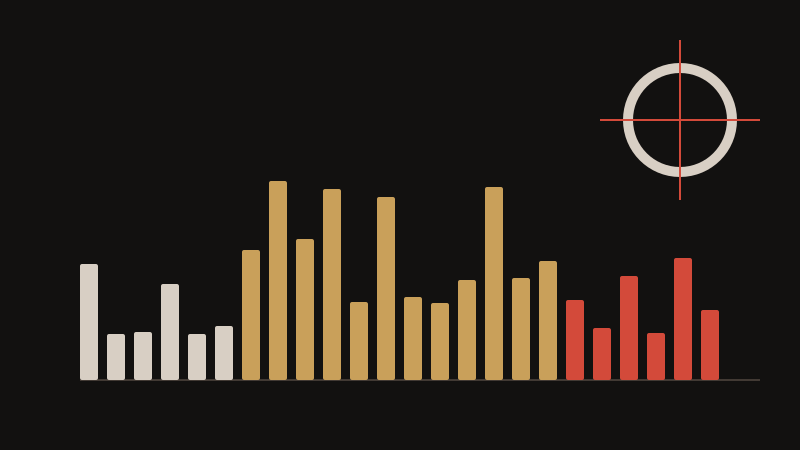

Shutter speed is how long the camera's sensor is exposed to light, measured in fractions of a second. 1/1000s is a very brief slice of time; 1/30s is much longer. Each change along the scale, 1/1000, 1/500, 1/250, 1/125, 1/60, 1/30, halves or doubles the light, so it is one full stop. Fast speeds freeze motion, slow speeds record it as a blur, and both are creative tools rather than errors.
To freeze action, match the speed to the subject. People walking: 1/125s. Children running or pets: 1/500s. Cyclists and runners: 1/1000s. Birds in flight and motorsport: 1/2000s or faster. When light is low and you need speed, open the aperture or raise ISO rather than accepting a blurry frame. For panning shots, use about 1/60s and track the subject smoothly so the background streaks while the subject stays sharp.
To create blur, slow down deliberately. Waterfalls turn silky at 1/4s to 1 second; traffic light trails need 5 to 30 seconds on a tripod. Any exposure longer than about 1/30s almost always needs support, because handshake becomes visible. A useful rule for handheld shooting is to keep the shutter at 1/(focal length) or faster, so 1/50s on a 50mm lens and 1/200s at 200mm. Modern image stabilisation buys you two to four extra stops.
Two common errors stand out: shooting at 1/30s indoors and blaming the lens for soft photos, and freezing every drop of water so that a waterfall looks like broken glass. Check the shutter speed in the viewfinder before every shot, and shoot a short burst when timing matters.
Key points
- 1/125s walking, 1/500s running children, 1/1000s cyclists, 1/2000s birds in flight.
- Handheld rule: shutter at least 1/focal length, so 1/50s at 50mm and 1/200s at 200mm.
- Waterfalls smooth at 1/4s to 1s; light trails need 5 to 30 seconds and a tripod.
- Each full stop halves or doubles the light, so a faster speed costs you exposure.